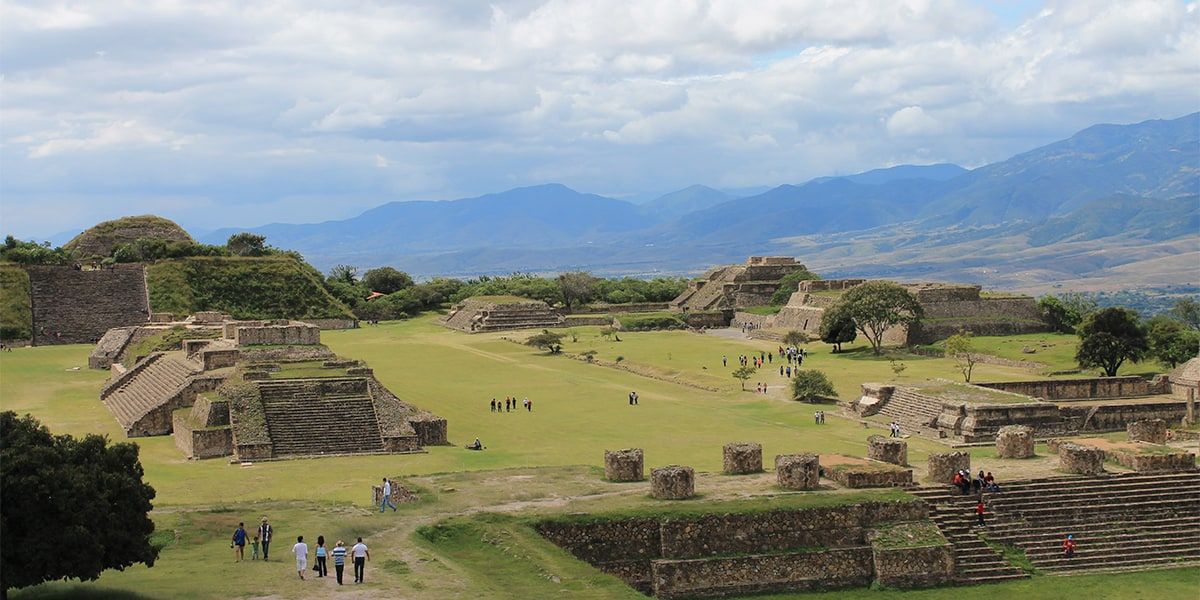
Teotitlán del Valle is a Zapotec village half an hour east of Oaxaca City, and it is where most of the wool rugs you see in the markets are actually made. Walking into a family workshop here changes how you look at every one of them afterwards.
This guide is about what to look for, what to ask, and how to buy in a way that is fair to the person who made the piece.
From sheep to rug
The process starts with raw wool, which is washed, carded and spun. In many workshops you can still see hand carding and spinning, and the difference shows: hand-spun yarn is slightly irregular, and that irregularity gives the finished rug its depth.
The weaving happens on a pedal loom, a technology that arrived in the colonial period. Before that, Zapotec weavers worked on the backstrap loom, which is still used in other parts of Oaxaca for garments. A large, finely woven rug can take weeks or months on the loom.
The designs are worth looking at closely. Many of them are the same stepped fret patterns — grecas — carved into the stone walls at Mitla, a few kilometres down the road. Others are family designs, and some are modern work by weavers who trained as artists.
Where the colors come from
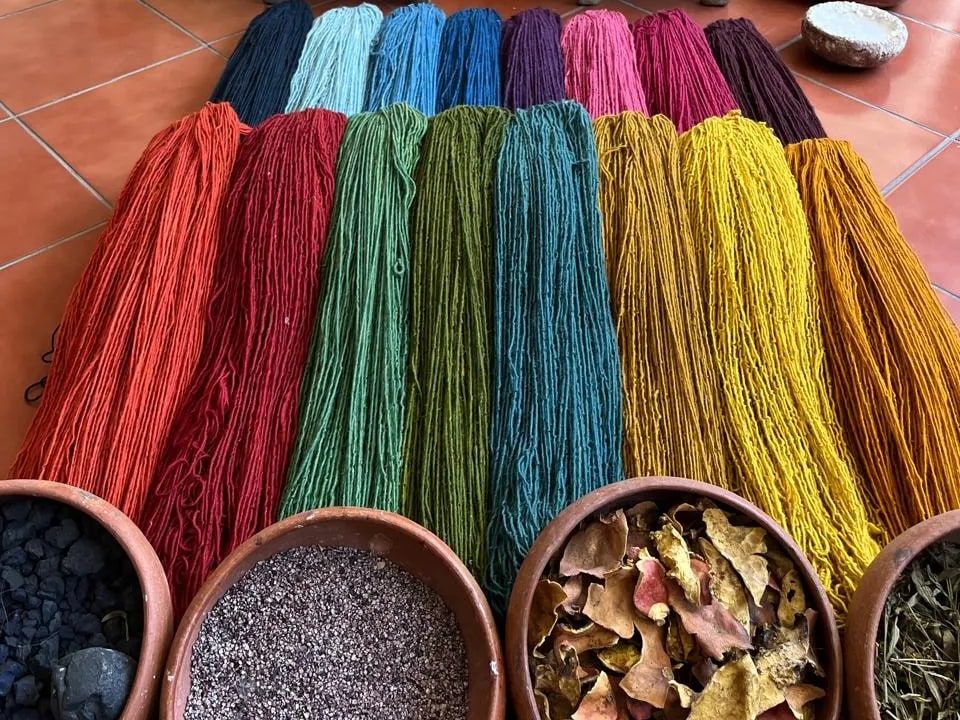
This is the part that surprises people. The deep reds and pinks come from grana cochinilla, an insect that lives on nopal cactus and has been cultivated in Oaxaca since long before the Spanish arrived. Crushed, it produces a red so valuable that it was once one of the most traded goods in the world.
The blues come from añil, indigo, fermented in vats. Yellows come from marigold — cempasúchil — and other plants. Greens are usually built by overdyeing blue with yellow. Browns and blacks come from things like pecan husks, pomegranate skin, moss and iron-rich mud.
Workshops often demonstrate this with a lime and a piece of cochineal: squeeze the acid onto the pigment and the color shifts from deep crimson toward orange. That shift is a chemistry lesson and a sales pitch at the same time, and it is genuinely fun to watch.
Natural dye or synthetic: how to tell
Both exist in the village, and synthetic is not automatically bad — it is cheaper and it has its place. But you should know which one you are paying for.
Naturally dyed wool tends to have slight variation across the piece, because each dye bath differs. Synthetic colors are flatter and more uniform, and can be louder than anything a plant produces. Ask directly which dyes were used, and ask to see the materials; a workshop that works with natural dye will be glad to show you the cochineal and the indigo.
Ask about the wool, too. Some pieces mix wool with acrylic, which changes the price and how the rug ages.
Buying fairly
Price in Teotitlán tracks real things: the size of the piece, the density of the weave, whether the dyes are natural, and how many weeks of work went into it. A tight weave in natural dye is slow work by a skilled person, and it costs accordingly.
Buying directly in the village means far more of that money stays with the family that wove it. Hard bargaining on a piece that took a month is not a win; it just moves the cost onto the weaver.
If you are not buying, that is fine too. Workshops are used to visitors who come to watch and learn, and a genuine conversation is welcome.
Beyond the workshops
The village church was built over a Zapotec temple, and carved pre-Hispanic stones are visible set into its walls — the older structure is literally part of the newer one.
There is a small community museum with textiles and archaeological pieces, and the village is also known for its food, including some of the best-regarded traditional kitchens in the valley.
FAQ
Can you buy rugs directly from the weavers?
Yes. Visiting family workshops is the normal way to buy here, and buying there supports the artisans directly.
How far is Teotitlán del Valle from Oaxaca City?
It is a turn off the highway east toward Tlacolula, roughly half an hour from the city, which is why it is usually combined with other stops on the same road.
What is grana cochinilla?
An insect cultivated on nopal cactus whose body produces an intense red pigment. It has been used in Oaxaca for centuries and is still the source of the reds and pinks in these rugs.
Last reviewed: